Is it happening to you after spending years building a career, managing teams and taking decisions that affect people and business outcomes, you are thinking of turning that experience into a career in leadership coaching? If it is so, then you’re at the right place.
We know that you must have various questions in mind like “how to become certified leadership coach”, what is the best leadership coach training program, what is the leadership coach certification cost, Is an ICF credential worth the investment and so on.
That’s what this guide is for. It covers the full picture: what the role actually involves, which certifications carry real weight in the Indian corporate market, what the investment looks like against what the career returns, and the practical steps to build a functioning leadership coaching practice rather than just collect a certificate.
Keep reading and get the answer for each question with every section.
First thing first!
Getting the answer to the basic yet important question of “Should You Become a Leadership Coach After Years of Experience in the Corporate World” is very important to proceed further.
The 2025 ICF Global Coaching Study puts the number of professional coach practitioners worldwide at 122,974, a 54% increase since 2019, which sounds like a crowded market until you look at the demand side. One-third of Fortune 500 companies actively use executive coaching. Most mid-sized Indian organisations don’t yet have access to a credible leadership coach at all. The supply has grown, but the demand is outpacing it.
Before planning a path in, it’s worth being specific about what leadership coaching is and what it isn’t, because the field attracts a lot of people who are actually describing something else.
Leadership coaching is a structured professional relationship in which a certified coach helps a leader, whether a new manager, a mid-level director, or a senior executive, develop the awareness, mindset, and behaviours that make them more effective with people.
Leadership Coaching is not consulting, because a coach doesn’t tell the client what to do. It is not mentoring, because a coach doesn’t need industry-specific experience in the client’s sector. It is not therapy, because coaching is forward-focused and is not designed to address clinical issues.
What leadership coaching does involve, practically, is:
Organisations paying for leadership coaching for executives expect to see specific behavioural changes, not just good conversations.
If you’re serious about the leadership coaching career, then this is the most important section. The right certification will give you an edge over others.
A search for leadership coaching certification returns hundreds of options, ranging from ₹10,000 weekend programmes to multi-year, six-figure investments, and distinguishing between them requires understanding what the market actually looks for.
The International Coaching Federation (ICF) is the global standard-setter for coaching credentials, and in the Indian corporate market, it is the credential that L&D heads, HR directors, and senior executives recognise and respect. Other certifications exist and some are credible, but for a leadership or executive coaching practice in India, ICF accreditation is the credibility baseline.
The three ICF credential levels are:
ACC (Associate Certified Coach)
It is the entry-level ICF credential, appropriate for coaches building their early practice. It requires 60+ hours of accredited coach-specific training, 100 documented coaching hours, 10 hours of mentor coaching, and passing the ICF Credentialing Exam. Most Indian professionals pursuing leadership coaching start here.
PCC (Professional Certified Coach)
It is the credential that carries the most weight in corporate India for leadership and executive coaching work. It requires 125+ hours of training, 500 documented coaching hours, and 10 hours of mentor coaching. Reaching PCC typically takes two to four years of consistent practice after completing the training.
MCC (Master Certified Coach)
The highest ICF credential, held by a small percentage of coaches globally. It requires 200+ hours of training and 2,500 documented coaching hours. This is a long-term career milestone, not a starting point.
For most professionals entering leadership coaching in India, the realistic path is:
Get ICF Level 1 accredited training → earn ACC → build a practice → progress toward PCC over three to five years.
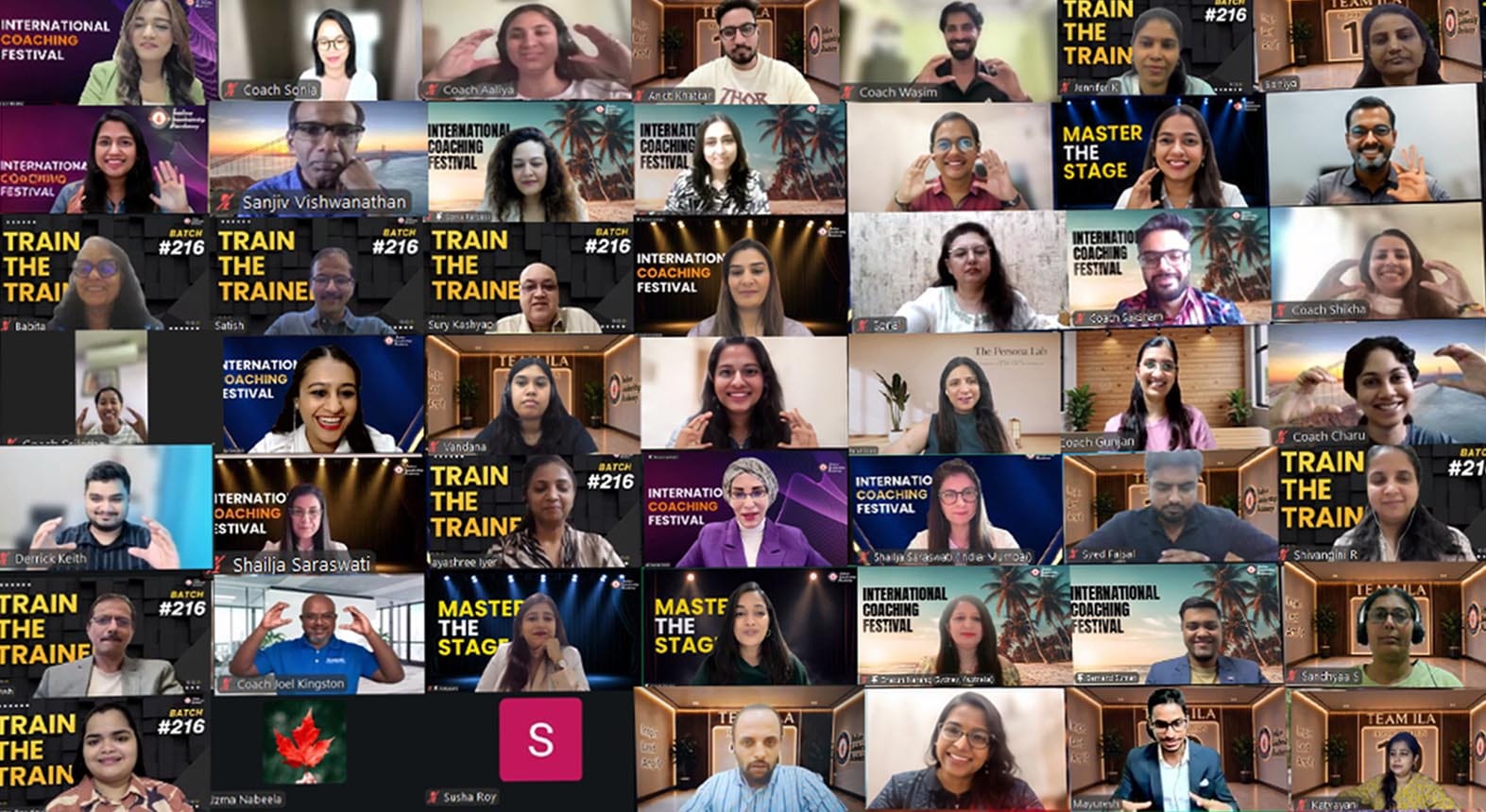
ILA (Indian Leadership Academy) offers ICF Level 1 (ACC) in a 12-week programme with 4-hour sessions per week, and ICF Level 2 (PCC) in a 10-week programme with 4-hour sessions per week.
Its curriculum covers the full ICF Core Competency framework and includes supervised practice, mentor coaching, and post-certification community support which matters because the hours needed for credentialing don’t stop when the training ends.
When evaluating any leadership coaching certification programme, the questions worth asking are:
The cost question comes up early and deserves a direct answer. In the Indian market, ICF Level 1 accredited programmes from credible providers range from approximately ₹75,000 to ₹2,50,000 depending on the institution, format, duration, and what’s included (mentor coaching hours, exam preparation, community access).
What the investment returns depends entirely on how seriously the coach builds a practice afterward. Here’s what the market currently supports in India:
The return on a certification investment, for a coach who builds a genuine practice, is strong. The coaches who don’t recoup it are the ones who complete the certification and then wait for clients to find them.
Once the certification is done, this section will help you to build a serious career out of it.
Niche down before marketing up. A leadership coach who works with “anyone who needs coaching” is invisible in a search. A coach who works specifically with first-time managers in IT companies, or with women leaders in financial services, or with founders navigating their first scale-up, is findable, referable, and memorable. The niche doesn’t have to be permanent, but it has to exist at the start.
Build credibility before building a pipeline. In the early months, the goal is not revenue. It is evidence. Offer pro bono or discounted coaching to three or four leaders in exchange for written testimonials, case study material, and permission to use outcomes in marketing. Those three or four clients are worth more than any amount of LinkedIn posting.
Position for corporate buyers, not just individuals. More than 50% of coaching engagements globally are sponsored by organisations, not individuals. In India, the corporate buyer, typically an L&D head, CHRO, or business unit head, controls the largest coaching budgets and offers the most repeatable revenue. Getting in front of that buyer requires speaking their language: ROI, leadership behaviour change, retention metrics, and succession planning, not the language of personal transformation.
How to get leadership coaching clients in the early stage:
Leadership coaching and executive coaching are related but distinct specialisations. Leadership coaching typically covers a broader range of leaders, from new managers to directors. Executive coaching is specifically focused on C-suite and senior leadership, where the stakes are higher, the engagements are typically longer, and the fee structure is considerably different.
Developing an executive coaching practice in India requires more than an ICF credential. It typically involves:
The path to executive coaching in India is generally built through five to seven years of leadership coaching practice, building progressively senior client experience, before positioning specifically at the C-suite level.
The routes into a functioning leadership coaching career in India are more varied than most people expect when they start:
Leadership coaching in India is no longer a niche career that only a handful of people stumble into. Organisations are actively looking for credible, certified coaches to work with their managers and executives, and the supply of genuinely qualified coaches is still catching up with that demand. For an Indian professional who has spent years developing people informally, this window is real and it won’t stay open indefinitely as the market matures.
The path itself is clear enough: choose an ICF-accredited programme, accumulate coaching hours deliberately, build a niche early, and treat the post-certification phase as seriously as the training itself. What separates coaches who build a sustainable practice from those who collect a certificate and wait is not talent. It is the willingness to treat this as a business from day one, with the same rigour and intention they would bring to any other professional commitment.