Most people who end up becoming life coaches will tell you the same thing: the idea didn’t arrive in one clean moment. It built up slowly. Maybe you were the person at work everyone came to when things got hard. Or maybe you went through something personally like a career shift, a crisis, a period of real growth and learnt about your other side of wanting to help others do the same.
Whatever brought you here, you’re asking the right question at the right time. The life coaching profession in India is no longer a fringe career option. It is a serious, growing field with real income potential, global credibility, and a client base that is only getting more receptive. But stepping into it the right way matters more than anything else.
In this guide, we are going to walk you through exactly how to become a certified life coach in India, what certifications actually mean something, and how to think about building a practice that lasts.
Before anything else, let’s sort out the confusion because there is plenty of it.
Life coaching is not therapy. It is not mentoring either, though the two often get used interchangeably. A therapist works with the past and with pathology. A mentor shares their own experience and tells you what worked for them. A life coach does something different altogether. He works with where you are now and where you want to be, helping clients get out of their own way through the right questions, honest reflection, and structured accountability.
In India specifically, the work of a life coach tends to touch on things people feel deeply but rarely talk about openly at work. These can be career stagnation, burnout that gets dressed up as “I’m just busy” and many more. Life coaches who can hold space for these conversations, with skill and without judgment, are in real demand in the Indian professional ecosystem.
Here’s something worth knowing before you invest your time and money into a certification program to become a life coach.
As per the ICF Global Coaching Study (2025), the global coaching industry crossed $5.34 billion in revenue in 2025, and Asia-Pacific is currently the fastest-growing region in the world for coaching services. As per the 2026 Life Coaching Market Report, India is expected to lead that regional growth through the rest of this decade, driven by a young professional population, rising corporate investment in people development, and a cultural shift where seeking a life coach is increasingly seen as a sign of ambition rather than weakness.
On the earnings side, certified coaches in India with a defined niche and solid credentials can realistically charge anywhere from Rs. 3,000 to Rs. 15,000 per session. Executive and leadership coaches working with senior professionals often do considerably better. This is not passive income or a weekend hobby. Done seriously, life coaching is a profession that rewards the investment you put into it.
Having said this, the market is also getting smarter. Corporate clients in particular now ask about credentials and accreditation of a life coach. A certificate from an unrecognized program will not take you far. That is exactly why choosing the right certification from the start is the most important decision you will make on this journey.
One thing experienced coaches will always tell you: the clearer your niche, the faster your practice grows. It is tempting to position yourself as a coach for everyone. In the short run, you might feel safe but in the long run it might make you forgettable.
Think about what you bring to the table from your current or past career. An HR professional stepping into coaching has natural credibility in leadership and executive coaching. A healthcare professional pivoting toward personal development work might find health and wellness coaching a more powerful fit. A corporate trainer with years of facilitation experience could thrive in transformational coaching programs that blend group and individual work.
Some of the strongest niches in the Indian coaching market right now are life coaching for career transitions, executive life coach training for senior leaders, health and wellness coaching, leadership and life coaching within organizational settings, and personal development coaching for working professionals.
You do not need to have everything figured out before you start. But having a direction saves you from building a practice with no clear center.
Ironically this is the stage at which most aspiring coaches spend the most time researching and also make the most costly mistakes.
In India today, you will find dozens of programs using words like “certified,” “accredited,” and “internationally recognized.” Not all of them mean the same thing. The benchmark that actually matters in professional coaching is accreditation from the International Coaching Federation, or ICF. This is the most respected credentialing body in the world, and when Indian corporates, MNCs, and serious coaching clients evaluate a coach’s credibility, the ICF credential is what they look for.
ICF offers three levels of credentials.
Level 1 is the ACC or Associate Certified Coach. It is the entry point and requires a minimum of 60 training hours and 100 hours of actual coaching experience.
Level 2 is the PCC or Professional Certified Coach. It is the intermediate level, requiring 125 or more training hours and 500 coaching hours. This is the credential that opens doors to corporate and executive coaching work in a meaningful way.
The 3rd and final level is the MCC or Master Certified Coach. It sits at the top and requires 200-plus training hours along with 2,500 coaching hours. Very few coaches reach this level, and those who do have usually been practicing for many years.
So, as you are planning to start your life coaching career in India in 2026, you should start with the ACC or level 1. It is rigorous enough to give you genuine credibility and structured enough to give you a real foundation.
When evaluating programs, look specifically for ICF Level 1 or Level 2 accreditation. Level 1 was formerly called ACTP and Level 2 was ACSTH. These are not just marketing labels. They indicate that the program has been reviewed and approved by ICF itself, which means the training hours count toward your credential application. Programs that claim to be “ICF-aligned” or “inspired by ICF” without formal accreditation are a different thing entirely. If you are looking for the academies to pursue ICF level 1, then you can consider Indian Leadership Academy (ILA) as it offers ICF certification programs. Their programs are built around the realities of Indian organizational life rather than Western coaching models that don’t always translate cleanly to the Indian context.
A lot of people are surprised by how much of the real learning in a coaching certification happens outside the classroom, so to speak. To learn continuously, you might have to attend sessions, learn frameworks, competencies and coaching ethics from time to time. But the growth that makes you actually good at this work happens when you start coaching real people and getting feedback on it.
From the moment you enroll in an accredited life coach program, you should be looking for opportunities to practice. You can volunteer coaching with colleagues or friends in career transitions. The ICF also requires a minimum of 10 mentor coaching hours where an experienced, credentialed coach observes your work and gives you structured feedback. With ILA programs, you experience exactly this kind of progressive learning, with mentor coaching integrated into the process and peer practice built into the cohort model.
Once you have completed your training hours, gathered your coaching experience hours, and completed your mentor coaching requirement, the credentialing process itself is fairly clear. You apply through the ICF online portal, submit your documentation, and complete the ICF Credentialing Exam. This exam tests your understanding of ICF core competencies and the ethical standards of the profession. Candidates who have gone through rigorous, accredited training tend to pass it without significant difficulty.
The full journey from enrollment to receiving your ACC credential typically runs from six months to a year, depending largely on how quickly you accumulate your coaching hours.
Once you receive your certification, the real journey starts after all, getting certified earns you the right to call yourself a professional coach but it does not automatically hand you clients.
Building a coaching practice in India takes deliberate effort. Your niche positioning needs to be clear in everything you say publicly, your LinkedIn profile, how you introduce yourself, what you write about. In today’ s time, LinkedIn is genuinely the most powerful channel for Indian coaches looking to attract corporate and executive clients, and it rewards consistency over time more than any paid advertising will.
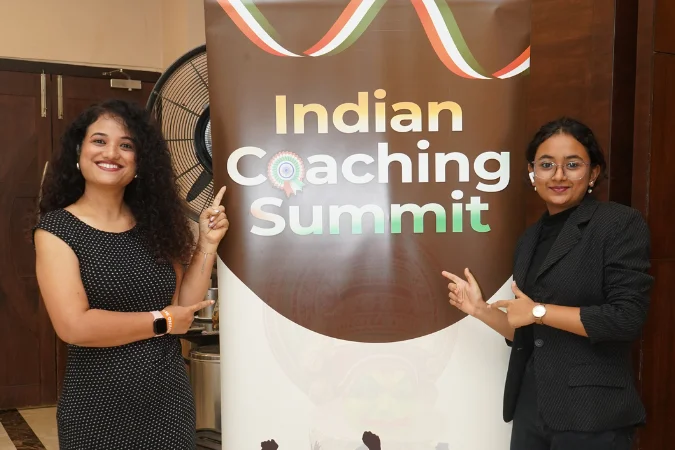
Getting involved in the broader coaching community matters too. ICF India chapters, coaching forums, and events like the coaching summits that ILA hosts for its certified coaches give you visibility, referral relationships, and continued professional development in one place. The Indian Coaching Summits organized through ILA are specifically designed to create this kind of platform for coaches who have come through their programs.
The best coaches were once exactly where you are now. Curious, a little uncertain, and looking for the right place to start. Indian Leadership Academy’s ICF certification programs give working professionals a structured, credible, and practically grounded path into professional coaching. If you want to build a coaching career in India that holds up in front of serious clients and serious organizations, it starts with getting the foundation right.